What Turner does here is almost scandalous: instead of landscape he paints the trembling birth of perception itself. Mountain, shore, water, sky—none arrive as fixed presences; they seem still to be entering the world, gathering themselves from some prior condition of radiance and air. The eye reaches instinctively for certainty—a horizon to stand upon, an edge to hold, some object willing to declare I am this—but Turner keeps withdrawing the promise. Shoreline seeps into reflection, mountain into weather, atmosphere into pigment, until seeing itself becomes liquid. A strange reversal takes place: light no longer falls upon things; things precipitate out of light, as if existence were condensing from brightness for the first time. And the movement across the canvas, from the bodily warmth of ochres and golds toward those pale silvers and blues, feels almost like a migration of consciousness itself, a passage from touch into distance, from matter into something nearly unnameable. We stand before it less as spectators than as minds at the threshold of appearance, at the place where the world has not yet fully decided to become itself, or perhaps we’re seeing a vision of the opposite end of the world’s formation. Turner understood that reality does not arrive as a collection of objects waiting to be catalogued. It comes to us first as weather, as sensation, as the slow astonishment of things entering the light. Or, this is what happens when the world as we know it departs.
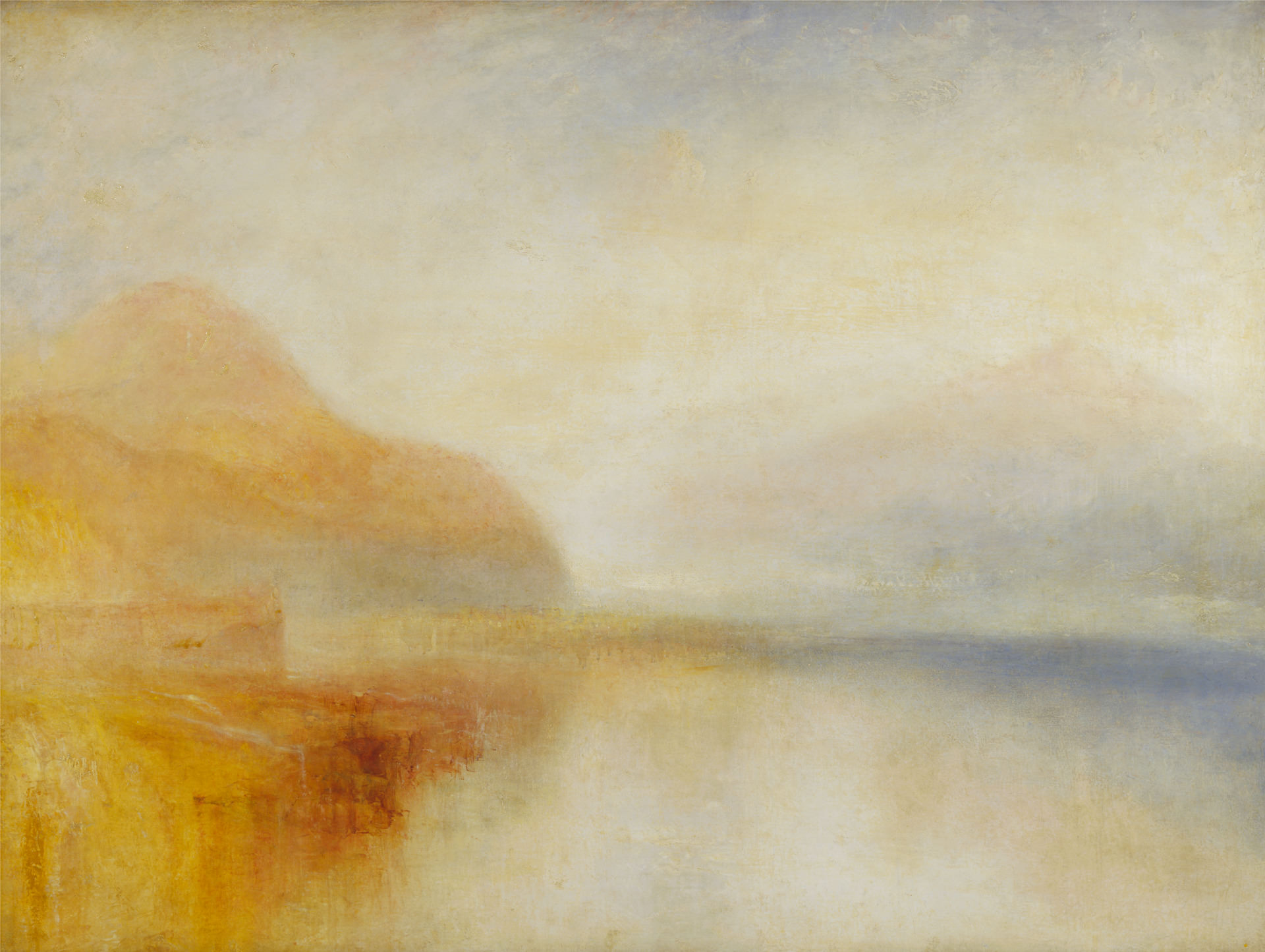
I think Jorie Graham often works this way at her best, particularly in poems from The Dream of the Unified Field, Sea Change, and Fast. In Graham, perception itself becomes the drama. A poem frequently begins with something apparently stable—a field, weather, a body, a memory—and then the syntax starts shifting beneath the reader’s feet. Certainties dissolve; clauses interrupt themselves; thought arrives not as conclusion but as weather passing through consciousness. What matters is not the object seen but the moment of its emergence. The poem seems to ask: What if seeing were not recognition but continual revision? Like Turner, Graham lets things precipitate out of light. The poem does not report reality after it has settled; it stages reality while it is still becoming. That is perhaps one of poetry’s highest ambitions: not to describe the world after perception has completed its work, but to catch the instant before the world hardens into certainty.
 Jeffrey Levine
katekeight2a91f6d5cd
May 22, 2026
I love this , Jeffrey. The slow astonishment of weather, the reversal, long before the object appears. I have to read all things Josie now, too. You always open my eyes to wh